


PRP for hair.
Supportive care for the hair you have — whether you’re thinning, planning a transplant, or looking after one you’ve already had.
Start with a conversation, not a commitment. Tell us where you are in your hair journey and a member of our team will reach out.
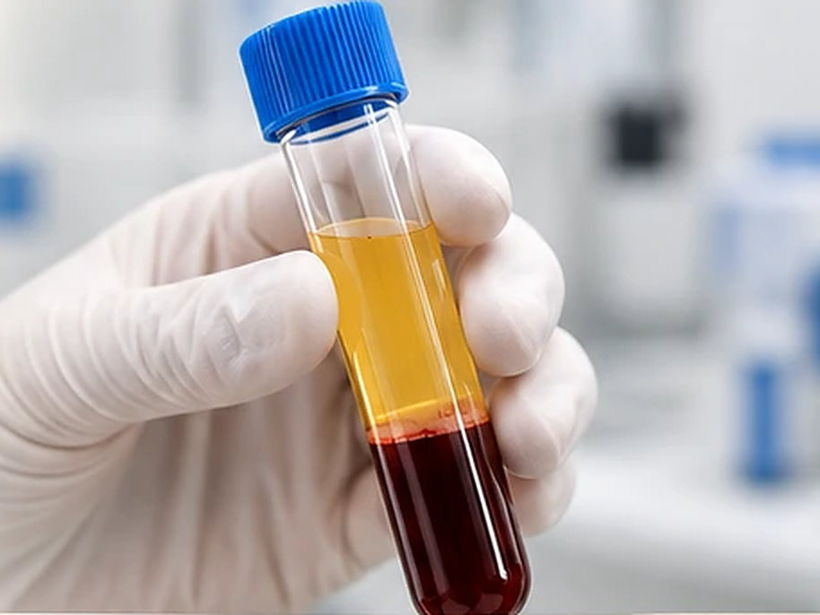 Platelet-rich plasma, prepared from your own blood
 Wherever you are with your hair.
Not everyone starts in the same place. Pick the one that sounds like you — each one opens the same simple request.
Considering a transplant
Planning surgery and wondering how supportive scalp care could fit around it? Bring the question to us — and to your surgeon, who sets the plan and the timing.
Ask about this ›Already had a transplant
Your grafts are one part of the picture; the hair around them keeps living its own life. Some clients ask about PRP as supportive care, always with their surgeon’s aftercare rules coming first.
Ask about this ›Thinning early
A widening part, softer temples, more hair in the drain. PRP is generally considered for early to moderate thinning, so an earlier conversation can mean more to talk through.
Ask about this ›Bald and just exploring
Honest answer: it depends. PRP is generally considered for thinning rather than long-term, complete loss, and it is not a transplant. If it isn’t a fit, your provider will tell you plainly.
Ask about this ›Your own platelets, at the scalp.
PRP (platelet-rich plasma) starts with a small sample of your own blood.
- A small blood drawLike the sample you’d give for a routine blood test.
- Spun to concentrateA centrifuge separates and concentrates the platelets and their growth factors.
- Placed at the scalpThe concentrate is injected at areas of thinning, in the office, with minimal downtime.
The idea is that these growth factors may help support a healthier environment around the hair follicle. It is not a guaranteed fix, it is not a hair transplant, and results vary from person to person. Your provider may also talk with you about PRFM, a related version designed to hold growth factors at the injection site a bit longer.
Looking for PRP for your skin? See PRP Facial at Dripology ›
Invested in your hair? Look after the rest of it.
A transplant is a real investment. Here is how some clients think about supportive care around it — and what we will not claim.
Ask early
If you’re planning a transplant, it’s reasonable to ask whether supportive scalp care belongs in the lead-up. Your surgeon sets the plan; we’re a second conversation, not a replacement.
Your surgeon’s rules come first
Healing instructions from your surgeon take priority. Bring them to your consult so timing can be discussed with that in mind.
The hair you didn’t move
Transplanted hair and your native hair are different, and native hair may keep thinning over time. Supportive care for that surrounding hair is what PRP may help with.
We don’t claim that PRP protects grafts, improves a transplant result, or guarantees any outcome. What you get is an honest look at your scalp and a straight answer on whether a series makes sense.
Good. This isn’t a booking.
It’s a request to talk. Leave your details, ask your questions, and decide what’s next on your own timeline.
A visit, step by step.
You send a request
Name, phone, email and where you are in your hair journey. No medical details needed.
Our team reaches out
We answer questions and find a time at Santa Monica or New York that suits you.
Consult with a provider
A provider reviews your goals and history, looks at your scalp, and tells you whether a series makes sense — before you commit to anything.
If it’s right, we begin
In-office PRP with minimal downtime, and aftercare guidance from your team.
Honest expectations.
Will PRP regrow my hair?
We can’t promise that, and PRP is not a guaranteed fix. Many clients describe any improvement in density as gradual, becoming more noticeable after several sessions rather than the first, and response varies with factors like genetics, hormones and the cause of thinning.
How many sessions are typical?
Most PRP hair plans involve several sessions spaced weeks apart, followed by periodic maintenance visits. Your provider recommends a schedule after seeing your scalp, and sticking to it matters.
Am I a candidate?
PRP is generally considered for early to moderate thinning rather than areas of long-term, complete hair loss, but candidacy has to be assessed in person. If thinning is more extensive or linked to a medical condition, your clinician may refer you to the right specialist rather than start a series that isn’t likely to help.
I’ve had (or I’m planning) a transplant. Can I still do PRP?
That’s a conversation to have with your transplant surgeon first, because their healing instructions and timing come first. Bring those to your consult and our provider will talk through whether and when supportive care could make sense. We don’t claim PRP improves graft survival or transplant results.
What is the treatment like?
It’s an in-office injection treatment with minimal downtime. Some clients notice mild scalp tenderness or redness for a day or two afterward, and your team will go over aftercare with you.
What does it cost?
Our published menu lists PRP for hair at $799 per session at Santa Monica. New York pricing is on the menu too. Your provider confirms what’s right for you at your consult.
Does sending a request commit me to anything?
No. Sending a request costs nothing and doesn’t book or charge you. It lets our team contact you so you can ask questions and choose your next step.
Is this only for men?
No. We’ve built this page with men in mind, since so many are weighing transplants and thinning, but anyone with thinning hair is welcome to ask.
Do you offer PRP for skin too?
Yes. PRP is also offered for the face at both offices. See PRP Facial for the details.
Two offices. One consult.
Santa Monica
1411 7th St.Santa Monica, CA 90401
(424) 255-4144
Request received.
Our Santa Monica team will reach out to you — keep an eye on your phone.
Can’t wait? Text us or call (424) 255-4144.
Results vary. PRP is not a guaranteed treatment and is not a hair transplant. Candidacy and treatment decisions are made by your provider at your consultation. These statements have not been evaluated by the Food and Drug Administration. Our services are not intended to diagnose, treat, cure, or prevent any disease.